

 Share your story and shine at JK Monitor!🌟 Welcome to JK Monitor, where every story matters and every achievement is celebrated! We invite you to share the remarkable journey of your life and showcase your accomplishments to the world. Join our exclusive interviews that honor exceptional individuals just like you.
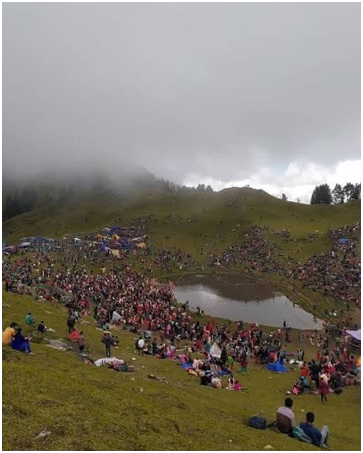 In the serene and rugged upper reaches of the Marmat area, nestled near the border of Doda and Udhampur districts, a profound spiritual fervor has once again awakened the mountains. The three-day annual ChottaManimahesh Yatra, reverently known among locals as the Shri Ram Rachna Yatra, commenced yesterday, marking the beginning of a sacred pilgrimage that draws thousands of devotees to the lap of the Himalayas.
Set against the backdrop of the majestic, though formidable, Marmat hills, this year's yatra, scheduled from September 16 to 18, stands as a testament to the enduring faith and rich cultural heritage of the region.
The sacred ChottaManimahesh shrine, the focal point of this arduous yet spiritually fulfilling journey, is located in the upper reaches of Latti, within the Behota Panchayat of Marmat Block. Situated approximately 55 kilometers from the Doda district headquarters, the shrine is a beacon of devotion for the people of Doda, Udhampur, and the adjoining areas. This annual pilgrimage is not merely a physical journey; it is a collective act of faith, a tradition passed down through generations, binding communities in a shared tapestry of belief and devotion.
The pilgrimage follows a meticulously observed traditional schedule, one that has been adhered to for decades. Following the commencement of the yatra, the pilgrims are set to converge at Behota village on September 17. This village serves as a crucial staging point, a place where the mortal world meets the spiritual ascent. From Behota, the yatra will proceed at around 2:00 PM towards Minesa, a high-altitude expanse of the Marmat hills. Here, amidst the thin air and the profound silence of the mountains, the devotees will stay overnight, their spirits buoyed by the camaraderie of the journey and the anticipation of the divine darshan that awaits them.
The climax of the pilgrimage is scheduled for the morning of September 18. The yatra will resume its onward march towards the sacred ChottaManimahesh site at Ram Rachna. It is here that the traditional religious rituals, including the revered Dhal Fort ritual, will be performed with utmost solemnity and devotion. According to the deeply rooted local traditions, the Shiv Pujaris from both Doda and Udhampur districts participate in these sacred rites, chief among them being the traditional crossing of the water of the sacred lake. This ritual, performed by the priests, is a central tenet of the pilgrimage and is believed to be essential to the spiritual efficacy of the yatra.
The significance of this pilgrimage extends far beyond the physical realm. The site holds a deep, almost ineffable religious significance for the people of both Doda and Udhampur districts. A prominent and awe-inspiring feature of the site is the ancient stone-carved representation associated with Ram Rachna. This ancient carving, etched into the very fabric of the mountains, depicts Lord Ram, Mata Sita, Lakshman, and Lord Hanuman. It is a tangible link to the epic past, a silent testament to the legends that permeate the region's folklore. Devotees from both districts flock to this sacred site to pay obeisance, to seek blessings, and to participate in the traditional religious rituals that have been the lifeblood of this pilgrimage for centuries.
The scale of the event is a reflection of its immense popularity and significance. According to the organizers, nearly 40,000 devotees are expected to participate in or visit the ChottaManimahesh pilgrimage during this annual religious occasion. Such a massive influx of pilgrims is a logistical marvel, made possible only through the dedicated efforts of the community. In the true spirit of 'seva' (selfless service), Langar facilities have been arranged along the entire route. These community kitchens provide food and refreshments to the weary pilgrims, ensuring that no one is left hungry or unattended during their spiritual journey. This practice of community service not only nourishes the body but also strengthens the bonds of brotherhood among the devotees.
However, the journey to the sacred shrine is not without its challenges. The high-altitude terrain and the unpredictable weather conditions of the mountainous region demand preparedness and caution. Recognizing this, Yatra Committee Chairman Suresh Sharma has issued an appeal to all devotees to remain prepared for the high-altitude conditions. He has urged the pilgrims to carry essential items, including umbrellas, warm clothes, blankets, suitable footwear, and other necessary belongings to ensure their comfort and safety. Sharma also emphasized the need for pilgrims to take necessary precautions in view of the changing weather conditions in the mountainous area, highlighting the importance of safety alongside spiritual devotion.
The ChottaManimahesh Yatra is a well-organized event that follows a cyclical pattern of activity. After completing the pilgrimage and the religious rituals at ChottaManimahesh, the yatra will return to Behota village on the evening of September 18. This return journey is not just a descent back to lower altitudes but also a return to the community fold. Subsequently, a 'Jagru'—a traditional night-long vigil of devotional singing and prayers—will be organized at Behota village. This Jagru marks the formal and spiritual conclusion of the three-day annual pilgrimage, bringing the community together one last time to offer thanks and share stories of their journey.
The ChottaManimahesh Yatra, also known as the Ram Rachna Yatra, continues to remain an important traditional religious gathering for devotees from Doda, Udhampur, and adjoining areas. It is a time when the entire region comes alive with the chants of devotees, the ringing of temple bells, and the spirit of communal harmony. This pilgrimage brings people together for prayers, religious rituals, devotion, and community service, reinforcing the timeless values of faith, unity, and selfless service. As the devotees embark on this three-day spiritual odyssey, they carry with them not just their prayers and hopes, but also the rich legacy of a tradition that has been the guiding light for generations. The ChottaManimahesh Yatra is not just a journey to a shrine; it is a journey into the heart of a culture, a journey that celebrates the indomitable spirit of faith in the lap of the Himalayas.
The significance of the Shri Ram Rachna Yatra extends into the realm of local lore and legend, weaving together threads of mythology and history. It is believed that the sacred site of Ram Rachna is intrinsically linked to the epic journey of Lord Rama during his exile. The ancient stone carvings are said to be a direct testament to his presence, making the site a living, breathing part of the Ramayana for the local populace. This deep-rooted belief transforms the physical pilgrimage into a spiritual sojourn, where devotees feel a tangible connection to the divine figures they revere. For the people of Doda and Udhampur, the yatra is a reaffirmation of their identity, a cultural cornerstone that has weathered the storms of time.
The sight of thousands of pilgrims, young and old, trekking through the challenging terrain with unwavering determination, is a powerful symbol of human resilience and spiritual strength. The high-altitude meadows of Minesa, where the pilgrims rest for the night, are transformed into a temporary township of faith, buzzing with the hum of prayers, devotional songs, and the shared warmth of community. The air itself seems charged with a palpable energy, a mixture of physical exhaustion and spiritual euphoria, a unique atmosphere that can only be experienced by being part of such a grand pilgrimage.
The ChottaManimahesh Yatra is a delicate balance of faith and practicality, tradition and modern-day organization. As the yatra progresses, it leaves behind a trail of blessings and a renewed sense of community. The return to Behota and the final Jagru will mark the end of this year's pilgrimage, but the spirit of the yatra will linger on in the hearts and minds of the devotees. The stories of their journey, the hardships overcome, and the divine blessings received will be recounted for months to come, adding new layers to the rich tapestry of the region's oral history.
The ChottaManimahesh Yatra is more than an event; it is a living tradition, a vibrant expression of faith, and a powerful reminder of the unifying power of shared belief. In a world often fragmented by differences, the ChottaManimahesh Yatra stands as a shining example of unity, devotion, and the enduring human quest for the divine. It is a journey that elevates the spirit, strengthens the community, and reaffirms the timeless values that bind us all together. As the devotees return to their homes, they carry with them not just the memories of a challenging trek, but the profound blessings of the sacred mountains, a peace that surpasses all understanding, and the quiet, unshakeable certainty of their faith.

