

 Share your story and shine at JK Monitor!🌟 Welcome to JK Monitor, where every story matters and every achievement is celebrated! We invite you to share the remarkable journey of your life and showcase your accomplishments to the world. Join our exclusive interviews that honor exceptional individuals just like you.
 - - A story of silent sacrifice, unpaid dues, and a system that exhausts its teachers in Jammu Kashmir
 When the bell rings for the mid-day meal in a government school tucked away in the hills of Jammu Kashmir, the sound carries more than just an announcement. It carries hope.
Children, many of them coming from economically fragile families, suddenly look alive. Their eyes search for plates, their conversations turn to food, and a faint smile spreads across faces hardened by poverty, harsh winters, and uncertainty. For some, this meal is the most assured nourishment of the day.
But at that very moment—when relief washes over the children—a deep, unspoken anxiety grips the teacher.
The teacher smiles outwardly, but inside, calculations begin.
Is there enough rice today? Will the dal be questioned? Has the oil finished? Will this expense ever be reimbursed?
In Jammu Kashmir, the mid-day meal is not just a welfare scheme. For teachers, it has quietly become a test of endurance, patience, and financial sacrifice—often paid directly from their own salaries, with no guarantee of reimbursement even after the academic session ends.
This is the story of how a noble scheme slowly turned into a burden of frustration, debt, and humiliation for teachers—and how, in the smoke of the mid-day meal, the teacher’s pen disappears.
A Scheme Born of Compassion, Sustained by Teachers’ Pockets
The Mid-Day Meal Scheme was introduced with a noble intention: to ensure nutrition, improve attendance, and keep children connected to education. In Jammu & Kashmir—where poverty, remoteness, and climatic hardship often combine—the scheme is even more crucial.
Yet, the success of this programme rests not on systems, but on individual teachers.
In thousands of government schools across rural and hilly areas of J&K, teachers are designated as MDM In-charges. This designation comes without training, without incentives, and without protection. What it does come with is responsibility—financial, administrative, and psychological.
The harsh reality is this:
In many schools, the funds meant for mid-day meals are released late, partially, or not at all. When supplies run out, teachers are left with a cruel choice:
Let children go hungry, or
Spend money from their own salary and hope the government clears the bills later.
Most teachers choose the second option—not because they are obligated, but because they cannot face hungry children.
Thus, month after month, year after year, teachers in Jammu & Kashmir quietly spend their own hard-earned salaries to keep the mid-day meal functioning.
And when the academic session ends?
The reimbursement often does not come.
Salary to Stove: A Teacher’s Unwritten Contribution
A teacher’s salary in Jammu & Kashmir is not extravagant. It supports families, educates children, repays loans, and meets rising costs in a region where essentials are already expensive due to terrain and transportation challenges.
Yet, teachers routinely spend from this limited income on:
Vegetables when supplies are delayed
Cooking oil when stock finishes mid-week
LPG refills when the cylinder runs out
Spices when allocations are insufficient
Receipts are carefully preserved. Bills are submitted. Registers are updated.
But months pass. Sometimes years.
The session lapses. Files move from table to table. Officers change. Queries are raised. Clarifications are demanded.
And finally, silence.
The money spent by teachers remains unpaid—neither officially denied nor approved. It simply disappears into administrative limbo.
For many teachers, this unpaid expenditure runs into thousands of rupees—an amount that matters deeply in households already stretched thin.
Expectation of Magic in a Land of Inflation
Jammu & Kashmir is not an easy place to run any scheme.
Vegetables in hilly districts cost far more than in cities. Fuel prices hit harder due to transportation. Winters increase consumption. Supply chains break during snowfall, landslides, or unrest.
Yet, the per-student conversion cost remains uniform—unchanged, unrealistic, and insufficient.
Administrators expect:
Thick dal
Fresh green vegetables
Adequate quantity
Hygienic cooking
Strict menu compliance
But they never ask: How is this possible within the given budget?
Teachers are expected to be magicians—producing royal meals with meagre funds. When the math fails, they compensate from their own pockets, because refusal invites inspections, explanations, and reprimands.
In Jammu Kashmir, this pressure is sharper. The terrain does not forgive budgetary ignorance.
Mountains and Plains: One Rate, Unequal Reality
Perhaps the greatest injustice lies in the policy of uniform rates.
Can a vegetable bought in a Jammu city market cost the same as one transported to a remote village in Kupwara, Poonch, Doda, or Kishtwar?
The answer is obvious—but policy refuses to acknowledge it.
Transportation costs, fuel consumption, and limited availability make essentials one-and-a-half to two times more expensive in mountainous regions. Yet, the government rate remains the same across the Union Territory.
This is not equality.
This is systemic neglect.
Teachers working in border areas and remote hamlets already face difficult living conditions. Expecting them to absorb additional costs from their salaries is nothing short of exploitation.
Teacher or Accountant? The Fear of Audit
The word audit sends a chill down the spine of an MDM in-charge.
Teachers are required to maintain multiple registers with near-perfect accuracy. Every grain, every rupee, every attendance figure must align.
A minor mismatch—a one-rupee difference, a single-day attendance variation—can trigger harsh accusations.
Words like embezzlement and scam are used casually, without understanding context or intent.
A teacher who spent his own money to feed children is suddenly viewed with suspicion—as if he is a criminal.
This culture of distrust destroys morale.
Teachers stop sleeping peacefully. They fear inspections more than classroom challenges. They worry not about pedagogy, but paperwork.
Mental torture replaces professional pride.
Teaching Suffocates in the Kitchen Smoke
The most tragic loss is invisible but devastating: teaching.
In the morning assembly, instead of focusing on values, the teacher calculates gas usage. During class, interruptions come from the kitchen.
“Sir, there is no turmeric.”
“Madam, rice stock is over.”
Lesson plans collapse under meal plans.
Children eat—but learning suffers.
A system designed to support education ends up undermining it.
Session Ends, Dues Remain
Perhaps the most painful chapter is what happens at the end of the academic session.
Teachers submit final expenditure statements. They attach bills, receipts, registers. They wait.
But with the session closed, priorities shift. Files stagnate. New sessions begin with old dues unresolved.
Teachers are told:
“Next financial year.”
“Wait for approval.”
“Funds are not released.”
The money spent from personal salaries remains unpaid—turning goodwill into frustration.
This is where hope dies.
A Strong India, A Weak System
India today is among the world’s largest economies. Digital governance, direct benefit transfers, and advanced monitoring systems exist.
Then why, here are teachers still forced to finance a government scheme from their own pockets?
Why are reimbursements delayed beyond sessions?
Why is accountability imposed only on teachers, not on the system?
If we truly aspire to be a Vishwaguru, this contradiction is unacceptable.
The Way Forward: Restore Dignity, Restore Focus
The solution is clear and practical.
Appoint Mid-Day Meal Managers or dedicated contractual staff.
Ensure timely fund release before supplies run out.
Clear teachers’ pending reimbursements without delay.
Introduce region-specific conversion costs for hilly areas.
This will bring two essential changes:
Professional management of meals
Stress-free teachers focused on teaching
Teachers must not be cooks, accountants, or financiers.
They must be teachers.
Let the Pen Return to the Classroom
In Jammu Kashmir—where education is already a fragile bridge to stability—teachers deserve trust, respect, and dignity.
The mid-day meal should nourish children, not drain teachers’ salaries.
The stove’s smoke should not obscure the blackboard.
If we want strong classrooms, we must protect those who stand in them.
Let teachers hold pens, not ladles.
Let education come before registers.
Only then will the promise of both nutrition and education truly be fulfilled.
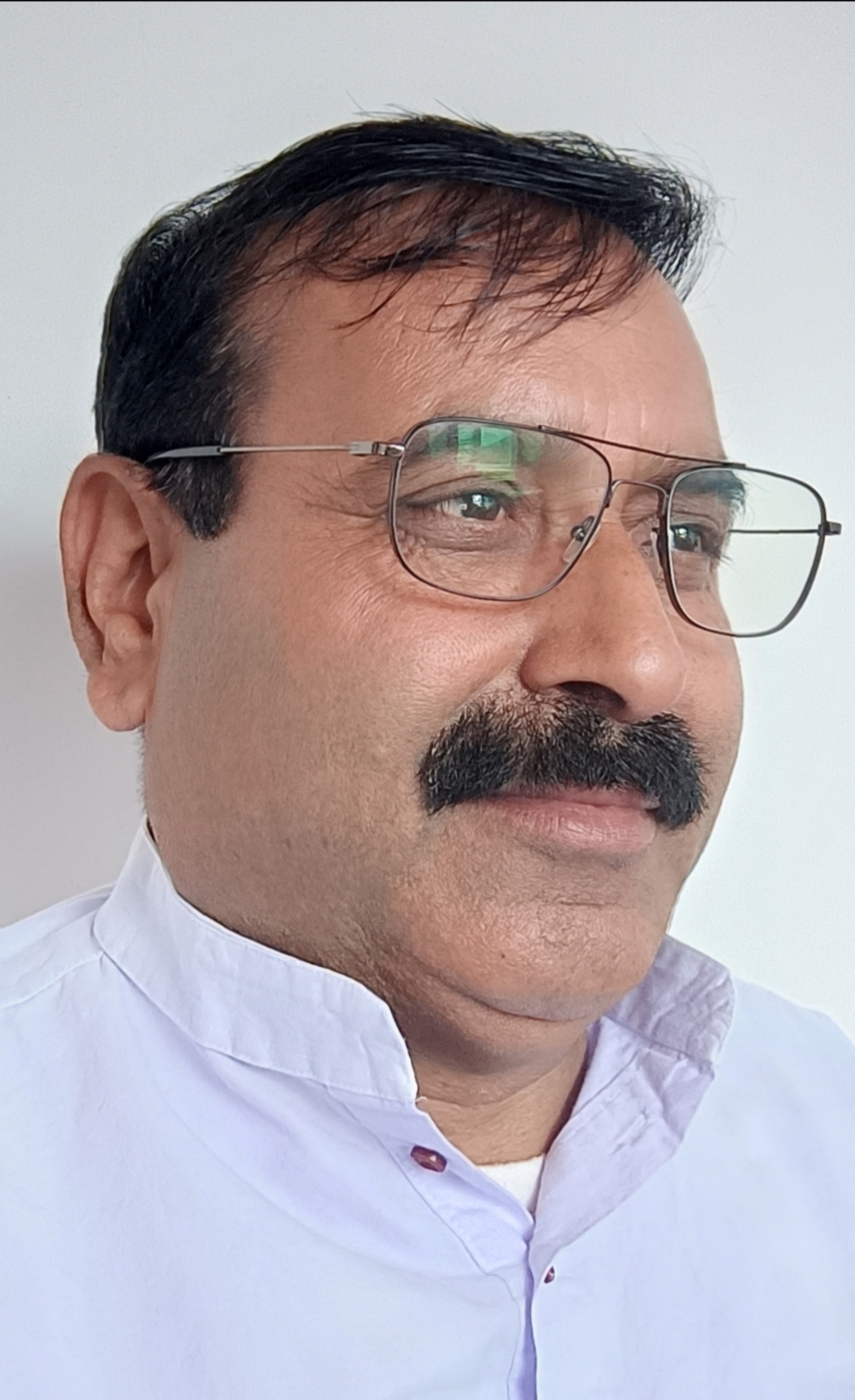
Devraj Thakur - National Joint Secretary, Akhil Bhartiya Rashtriya Shakshik Mahasangh - Bharat -Email ID: drthakur868@gmail.com