

 Share your story and shine at JK Monitor!🌟 Welcome to JK Monitor, where every story matters and every achievement is celebrated! We invite you to share the remarkable journey of your life and showcase your accomplishments to the world. Join our exclusive interviews that honor exceptional individuals just like you.
  I will always remember Dr. Priya Ranjan not only as the Chairman of JK Monitor, but as a mentor, guide and elder brother whose kindness shaped my life and work. Write a tribute at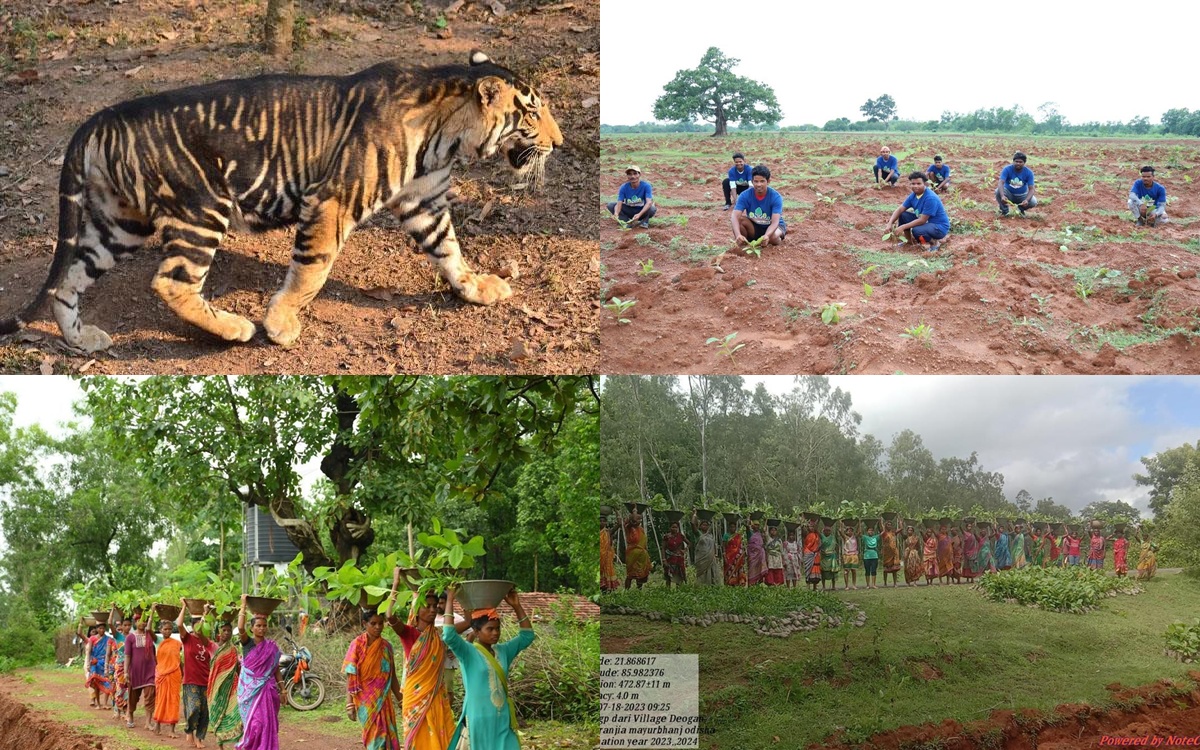
- At the Similipal Tiger Reserve, the ‘Trees for Black Tigers’ initiative has already planted 185,560 trees
ODISHA: Every year National Wildlife Day (22nd February) inspires collective reflection and constructive action for the protection of wildlife and biodiversity. The challenges of wildlife conservation however are complex as is obvious from the story of the rare black or melanistic tigers in Odisha's Similipal Tiger Reserve. This is India's fourth biggest tiger habitat and the only one in the world that harbours a black tiger population.
The unique black stripes of these tigers are indicative of possible inbreeding and dwindling genetic diversity. It is hence crucial to expand the genetic pool of the population and increase migratory flow. This entails expanding tiger corridors and this is where tree plantation initiatives can play a crucial part.
Mr. Pradip Shah, co-founder of the social enterprise Grow-Trees.com sheds light on why his organisation launched the ‘Trees for Black Tigers’ initiative in 2023. "The presence of black tigers in Odisha’s Similipal National Park has captivated the attention of wildlife enthusiasts and researchers worldwide. Their unique appearance is rooted in a concerning genetic phenomenon called pseudo-melanism, which is caused by inbreeding. The genetic mutation responsible for this excessive pigmentation is linked to a recessive gene that becomes more prevalent when tigers breed within a small, confined population. Over effort hence is to repair habitat fragmentation and promote genetic diversity," he says.
‘Trees for Black Tigers’ is not only helping expand their habitat but also mitigating human-wildlife conflict to create a safer environment for the tigers to thrive. Mr Shah explains why this is essential, "Conserving genetic diversity is critical for the resilience and adaptability of the species. Studying these tigers provides insights into evolutionary biology and the impacts of genetic isolation. This in turn informs broader conservation strategies. Their survival also supports the ecological balance of Similipal National Park. Without intervention, their isolated and inbred population faces high risks of extinction due to health issues and habitat loss. "
He adds that climate change and environmental stressors, such as rising temperatures and erratic rainfall are also fragmenting wildlife habitats, reducing prey availability, disrupting ecosystems, and increasing human-wildlife conflict. To counter this, over 185,560 trees have been planted in and around the National Park and over 2 lakh more will be added this year. They include climate-resilient species like Teak (Tectona grandis), Acacia and Jackfruit (Artocarpus heterophyllus). Acacia and Sheesam produce leaves, fruits, and seeds that attract herbivores, ensuring a stable food chain. Teak, with its dense foliage, offers cover and protection for both prey and predators, creating a balanced ecosystem.
These tree species also benefit local communities by providing employment, timber, fuelwood and fodder. This not only supports the local economy but also reduces dependency on the forest, minimising human-wildlife conflict. "By increasing forest cover, this project is supporting long-term conservation of black tigers, aiding carbon sequestration, groundwater recharge and enhancing the health of the fragile ecosystem," concludes Mr Shah.
