

 Share your story and shine at JK Monitor!🌟 Welcome to JK Monitor, where every story matters and every achievement is celebrated! We invite you to share the remarkable journey of your life and showcase your accomplishments to the world. Join our exclusive interviews that honor exceptional individuals just like you.
 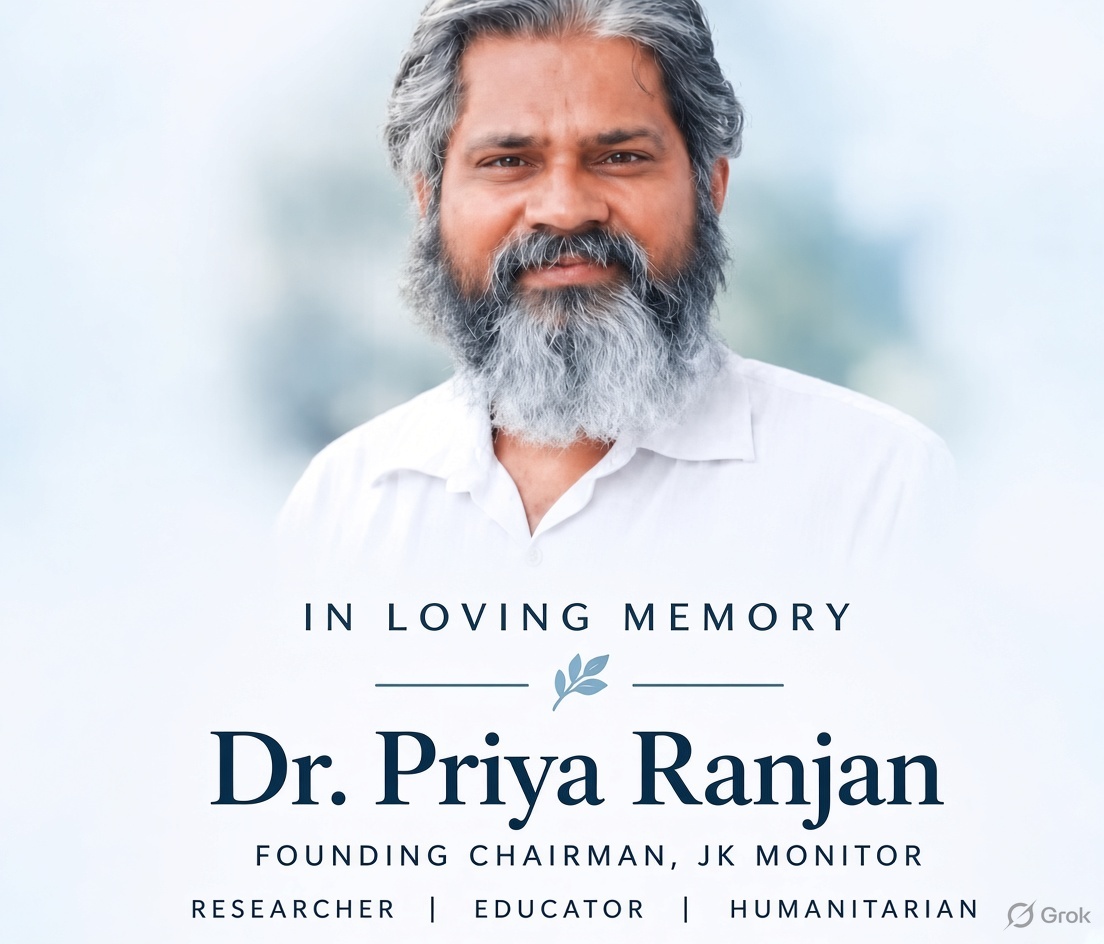 I will always remember Dr. Priya Ranjan not only as the Chairman of JK Monitor, but as a mentor, guide and elder brother whose kindness shaped my life and work. Write a tribute at
  BANGALORE: Pulmonology is one of the most vital specialties in respiratory care, often described as the medical detective of the respiratory system. Pulmonologists diagnose and treat conditions ranging from asthma to complex diseases such as lung cancer. Their role is especially critical in India, where NAPCON 2025 data shows that despite accounting for 18% of the global population, the country bears 30.2% of the global burden of chronic respiratory diseases. Millions live with asthma and COPD, many of whom remain underdiagnosed or lack timely access to lung-function testing. In critical care settings, pulmonologists are often among the first responders when patients struggle to breathe.
Highlighting the importance of the specialty, St. George’s University, School of Medicine in Grenada, West Indies, highlights pulmonology as a field that combines analytical expertise, advanced diagnostics, and high-impact patient care. SGU alumnus and practicing pulmonologist Dr. Sámal Jakobsen, MD’ 13, notes the breadth of the discipline: “We see patients with cough, dyspnea, COPD, asthma, pulmonary fibrosis, pleural disease, and manage the initial workup for suspected lung cancer. We also provide outpatient care and even palliative care in patients’ homes.”
Tips for aspiring pulmonologists
For medical students considering this path, early preparation, strong clinical fundamentals, and real-world exposure are key to building a meaningful career in pulmonology.
- Real-world experiences matter
Pulmonology is a deeply patient-facing specialty, often grounded in long-term care. Early real-world exposure can shape career choices in unexpected ways and highlight the importance of empathy and resilience in respiratory medicine. Reflecting on his own journey, Dr. Jakobsen shares, “My time in Grenada shaped me as a lifelong learner. I learned the value of structured learning and the importance of working together with colleagues, which helped me succeed and continues to influence how I practice medicine today.” Such experiences can strongly shape a doctor’s approach to learning and teamwork throughout their career. - Strong internal medicine fundamentals are essential
A solid grounding in internal medicine lays the foundation for a successful career in pulmonology. Building core clinical skills early, such as detailed history-taking, thorough physical examinations, and essential procedures, is critical to confident decision-making and patient care. As Dr. Jakobsen notes, early in his training, he “mastered the basics: taking thorough patient histories, performing physical exams, and learning key procedures like blood draws, arterial blood gases, lumbar punctures, and pleural taps.” These fundamentals continue to underpin effective pulmonary practice.
- Hands-on care and continuity define pulmonology
Pulmonology combines diagnostics, procedures, and long-term patient relationships, making it a distinctly hands-on and patient-centered specialty. Those who enjoy procedural work alongside sustained patient engagement may find the field especially rewarding, as it allows clinicians to make a tangible difference over time. - Respiratory care is a growing global need
Respiratory diseases remain widely underdiagnosed across the world, increasing the public health importance of pulmonology. Early and accurate diagnosis can significantly alter patient outcomes. Highlighting this gap, Dr. Jakobsen observes, “Many people never get proper workups, and COPD often goes undiagnosed. Quick diagnosis and treatment make all the difference.” This places pulmonologists in a critical position to improve care outcomes and address an expanding global health challenge.
A career that helps the world breathe better
Pulmonology is more than a medical specialty; It’s a calling to protect one of life’s most essential functions: breathing. For medical students ready to blend science, skill, and compassion, pulmonology offers a path that is as intellectually stimulating as it is profoundly human.
As SGU’s faculty and alumni continue to demonstrate, the field offers limitless opportunities to make a lasting impact, one breath at a time.
For more information on how SGU School of Medicine can prepare aspiring Indian doctors, visit SGU’s website.
About St. George’s University School of Medicine:
Founded in 1976, St. George's University (SGU) is a center for academic excellence worldwide. With students and faculty drawn from more than 150 countries, SGU is truly an international institution, with a uniquely global perspective. The SGU School of Medicine is accredited by the Grenada Medical and Dental Council which has been recognized by the World Federation for Medical Education (WFME). The school offers a four-year Doctor of Medicine (MD) degree program.
Students can also enter the MD degree program from many education systems around the world via the five-, six-, or seven-year tracks. SGU has a large network of 75+ affiliated hospitals and health centers in the US and UK, with the unique opportunity for students to begin their medical career in Grenada or the UK.
