

 Share your story and shine at JK Monitor!🌟 Welcome to JK Monitor, where every story matters and every achievement is celebrated! We invite you to share the remarkable journey of your life and showcase your accomplishments to the world. Join our exclusive interviews that honor exceptional individuals just like you.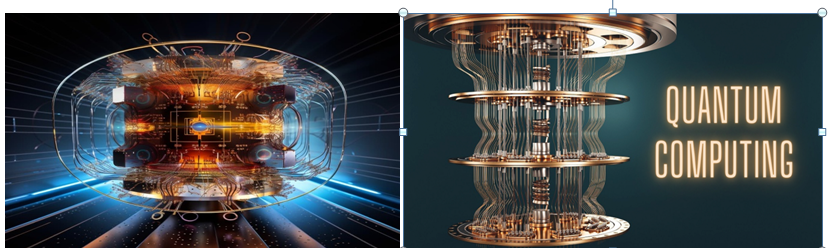
Technology has consistently transformed the way people live, work, and communicate. From the invention of computers to the rise of artificial intelligence, each technological breakthrough has opened new possibilities. Today, quantum computing is emerging as the next major technological revolution, with the potential to solve problems that are beyond the capabilities of even the most powerful traditional computers.
Conventional computers process information using bits, which can exist in one of two states: 0 or 1. Quantum computers, however, use quantum bits, or qubits. Unlike classical bits, qubits can exist in multiple states simultaneously through a phenomenon known as superposition. Another quantum principle, called entanglement, allows qubits to be interconnected in ways that significantly increase computational power. These unique properties enable quantum computers to perform complex calculations much faster than traditional systems.
The impact of quantum computing could be transformative across numerous industries. In healthcare, quantum computers can accelerate drug discovery by simulating molecular interactions more accurately and efficiently. Researchers may be able to develop new medicines and treatments in a fraction of the time currently required. In finance, quantum computing can improve portfolio optimization, fraud detection, and risk management by processing massive amounts of data and identifying patterns that would otherwise remain hidden.
Businesses can also benefit from quantum computing through improved supply chain management, logistics optimization, and predictive analytics. Complex business problems involving thousands of variables can be solved more effectively, leading to better decision-making and increased operational efficiency. Furthermore, quantum computing has the potential to significantly enhance artificial intelligence and machine learning by enabling faster training of models and more advanced data analysis.
Despite its enormous potential, quantum computing faces several challenges. Building stable quantum systems is extremely difficult because qubits are highly sensitive to environmental disturbances. Researchers must also develop effective error-correction techniques to ensure accurate computations. Additionally, the cost of developing and maintaining quantum hardware remains very high, limiting its accessibility.
Leading technology companies, governments, and research institutions are investing billions of dollars in quantum research. Organizations such as IBM, Google, and Microsoft are actively working to advance quantum technologies and bring practical quantum solutions to market.
Although widespread adoption may still be years away, the progress made in recent years has been remarkable. As research continues and technological barriers are overcome, quantum computing is expected to revolutionize industries, accelerate scientific discoveries, and reshape the future of computing. Just as classical computers transformed the twentieth century, quantum computing has the potential to define the technological landscape of the twenty-first century.