

 Share your story and shine at JK Monitor!🌟 Welcome to JK Monitor, where every story matters and every achievement is celebrated! We invite you to share the remarkable journey of your life and showcase your accomplishments to the world. Join our exclusive interviews that honor exceptional individuals just like you.
 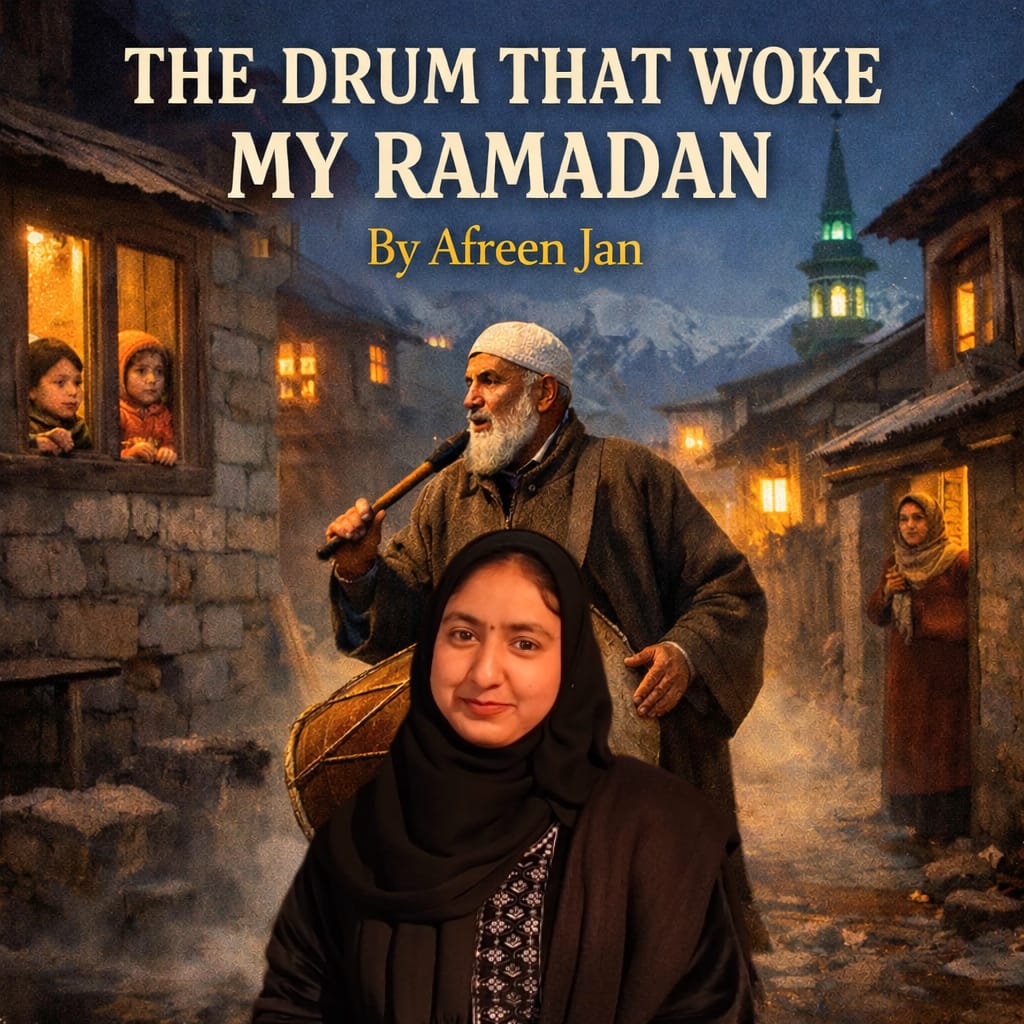 Some of my earliest memories of Ramadan in Kashmir are not of food or gatherings, but of a sound. A soft yet steady beat of a drum echoing through the quiet lanes before dawn.
As a child, I would often wake up to that sound while the valley was still wrapped in darkness. I remember lying in bed, half asleep, listening carefully as the rhythm slowly came closer to our street. It was Sahar Khan, walking through the neighbourhood to wake people up for Sehri.
My mother would already be in the kitchen, preparing the pre-dawn meal, while the lights in nearby houses began to turn on one after another. The peaceful silence of the night would slowly transform into a moment of life and warmth. For me, that drum was not just a sound it was the beginning of Ramadan every single day.
Back then, people did not rely on alarms or mobile phones. The voice and drum of Sahar Khan were enough to wake an entire community. His presence in the early morning hours ensured that families would not miss the blessed meal before the fast.
Years have passed since those childhood mornings. Today, our phones can wake us up with alarms at any time. Technology has made things easier, but somehow it has also made those moments feel different.
Yet whenever I hear the distant beat of a drum during Ramadan, it instantly takes me back to my childhood to those quiet mornings, glowing kitchen lights, and the comforting feeling that Ramadan had begun.
For many Kashmiris, Sahar Khan is more than just a man with a drum. He is a living reminder of a tradition that connects generations and keeps the spirit of Ramadan alive in the valley.